
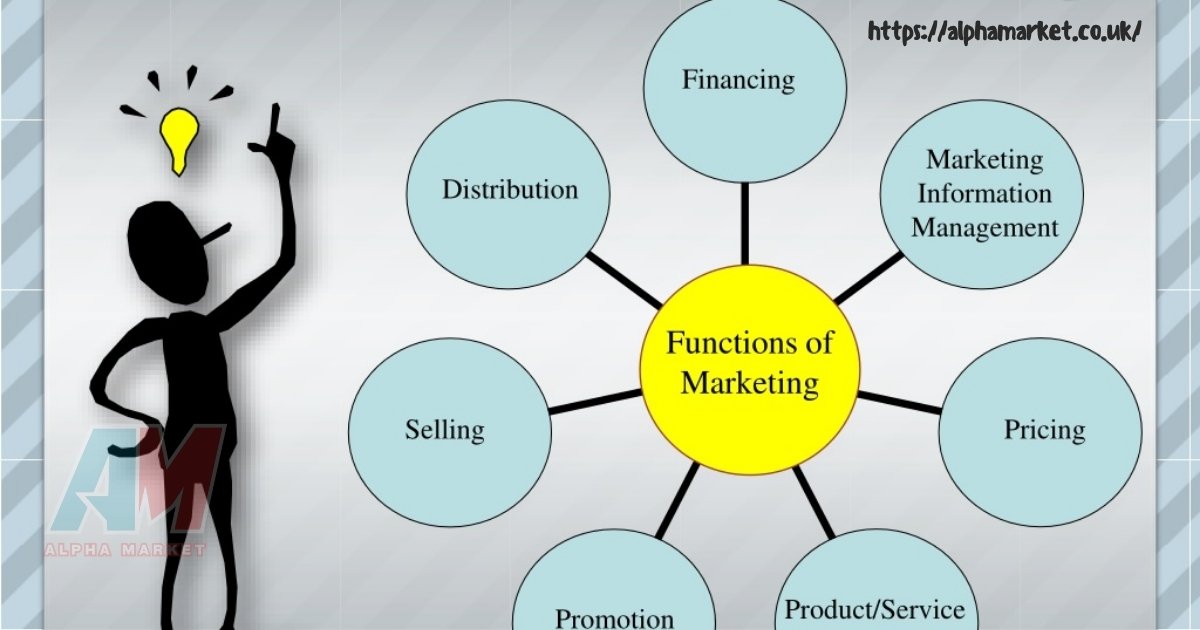
Most UK business owners can recite the 4 Ps in their sleep, but ask them what marketing actually does day to day and the answers get vague fast. That gap matters. The functions of marketing are the operational activities behind every campaign: the research, pricing, financing, and distribution decisions that happen before a single ad goes live. Understanding them is what separates a business that markets on instinct from one that markets on structure, and after a decade advising UK small businesses on exactly this, the pattern is consistent: the ones who name and assign these functions clearly outperform the ones who leave marketing as one undefined job title.
What Marketing Functions Actually Cover
Marketing functions are not the same as the marketing mix. The 7 Ps of marketing (Product, Price, Place, Promotion, People, Process, Physical Evidence) describe what a business decides. Marketing functions describe the operational work required to execute those decisions: market research, product and service management, pricing, promotion, selling, distribution, and financing. Seven distinct areas of activity, each with its own responsibilities, and each one a potential gap if left unowned.
For a UK small business, this distinction is not academic. A founder who understands the 7 Ps but never assigns someone to own market research will keep guessing at customer needs. A founder who promotes constantly but never revisits pricing will keep underselling. The functions are the accountability layer sitting underneath the strategic framework.
The 7 Functions Explained With UK Examples
Market research comes first because every other function depends on it. A Manchester-based SaaS founder who surveys churned customers before rebuilding onboarding is applying this function correctly. Skip it, and every downstream decision is a guess.
Product and service management covers ongoing development, not just the initial launch. A UK subscription box company that adjusts contents quarterly based on unsubscribe reasons is running this function actively rather than treating the product as fixed.
Pricing is where UK service businesses consistently underperform. Many price against their own costs instead of the value delivered. A bookkeeping firm saving a client eight hours a month should price against that time saved, not against an hourly rate that undervalues the outcome.
Promotion gets the most attention and the least discipline. Paid social, email, content, and SEO all sit here, but promotion without the four functions before it rarely converts well, regardless of budget.
Selling is the direct exchange: converting interest into revenue through calls, demos, or checkout flows. For UK e-commerce brands this function increasingly overlaps with conversion rate optimisation on the website itself.
Distribution covers how a product physically or digitally reaches the buyer. A Leeds furniture maker choosing between Etsy, a direct site, and trade showrooms is making a distribution decision that shapes margin and customer relationship for years.
Financing is the least visible function but the one that stops the other six from happening at all. Marketing needs a defended budget line, not leftover spend after every other department has taken its share.
Market Research and the Rise of Search Engine Marketing Intelligence
Modern market research increasingly runs through search data rather than surveys alone. Search engine marketing intelligence, meaning the practice of reading real search behaviour to understand what buyers want before they say it out loud, has become one of the sharpest tools inside the research function. According to the LOCALiQ UK State of Digital Marketing Report 2026, over 30% of UK marketers say they need more training in SEO, which is precisely where this function tends to break down.
A practical SEO example makes this concrete. A UK accountancy firm that notices, via Google Search Console, that visitors are landing on its site through the query “how long does a UK VAT registration take” can build a focused page answering that exact question in the first fifty words, with the author’s credentials attached. That page will consistently outrank a generic 2,000-word VAT guide, because it satisfies a specific, researched intent rather than a broad assumption about what the audience wants.
How the Functions Shift for B2C Subscription Businesses
These operational functions do not run identically across every business model. B2C elearning companies running recurring payments face a distinct version of each one. Market research shifts toward tracking which lesson modules correlate with cancellation. Pricing must account for monthly value perception rather than a single transaction, since a subscriber reassesses value every billing cycle, not once at purchase. Selling becomes less about a single conversion event and more about the renewal decision repeated every month.
Distribution for a subscription elearning brand is almost entirely digital, which puts more weight on the promotion and financing functions to sustain acquisition costs over a longer customer lifetime. A UK elearning platform that tracks cost to acquire against eighteen-month retained revenue, rather than first-month revenue alone, is applying these functions correctly for a recurring model. Businesses still building this foundation may find it useful to see how marketing fundamentals apply to UK businesses in 2026, which covers the strategic layer sitting above these operational functions.
Where the Functions Meet SaaS-Specific Execution
B2B SaaS businesses lean more heavily on certain functions than others. Selling extends across a longer cycle with multiple stakeholders, and promotion typically runs through content built for problem-aware, category, and commercial search queries rather than a single campaign push. Teams working specifically on organic growth in this space will find the tactical detail in SEO for SaaS strategies that actually work for UK B2B companies, which breaks down keyword mapping and technical SEO in more depth than fits here.
For smaller UK operations without a dedicated marketing department, one person frequently covers three or four of these functions simultaneously. That is workable at an early stage, but it creates blind spots as the business scales, particularly around market research and financing, which are the two functions most often dropped first when time runs short. The effective marketing strategies small businesses need in 2026 covers how UK SMBs sequence these priorities on a limited budget.
Frequently Asked Questions
What are the 7 functions of marketing?
The 7 functions of marketing are market research, product and service management, pricing, promotion, selling, distribution, and financing. Together they cover the operational activities required to bring a product or service to a buyer.
What are the 4 main functions of marketing?
Some frameworks condense the list to four core functions: market research, product development, promotion, and distribution, treating pricing, selling, and financing as supporting activities within those broader categories.
What is the main function of marketing?
Market research is generally considered the foundational function, since pricing, product decisions, promotion, and distribution all depend on accurate information about what the target customer actually needs and will pay for.
How do marketing functions relate to the 4 Ps?
The 4 Ps (Product, Price, Place, Promotion) describe strategic decisions, while marketing functions describe the operational work carried out to execute those decisions. The two frameworks work together rather than replacing one another.
Why do small businesses struggle to manage these marketing functions?
Small teams often assign all seven functions to one person, which works early on but creates gaps as the business grows, particularly around market research and financing, which tend to get dropped first under time pressure.
Final Thoughts
Every stalled marketing effort I have reviewed for a UK client traces back to one of these operational functions being ignored, not a bad campaign. Assign each of the seven to a specific person or process, even in a team of one, and revisit that ownership every quarter as the business changes. For a deeper reference on how these functions sit within recognised marketing practice, the American Marketing Association’s definition of marketing remains a solid starting point for any UK founder building this structure from scratch.

Jame Harry is a UK-based e-commerce strategist and digital marketing expert with over a decade of hands-on experience helping British businesses grow online. He has worked directly with independent retailers, Etsy sellers, and Shopify store owners across the UK, advising on everything from product listing optimisation to paid social campaigns. James specialises in turning small online shops into consistent revenue generators, with a particular focus on low-budget digital strategies that deliver measurable results without agency fees.